

Lead Nurturing: 7 Strategies to Turn Website Visitors Into Paying Customers
By SOAP Media || Oct 23, 2026
Here’s a hard truth most small business owners learn the expensive way: most people who visit your website aren’t ready to buy on the first visit. They’re comparing, researching, and quietly deciding who they trust. If your only plan is “get the click and hope,” you’re leaving a mountain of revenue on the table. That’s where lead nurturing comes in.
Lead nurturing is the practice of building relationships with potential customers at every stage of their buying journey, so that when they’re ready, you’re the obvious choice. At SOAP Media, we’ve spent 14+ years helping Canadian businesses turn clicks into conversations and conversations into customers, and we can tell you this: the businesses that win aren’t always the loudest. They’re the ones that follow up.
In this guide, we’ll break down what lead nurturing is, why it matters, and the exact steps you can take to build a nurturing system that works, without needing an engineering degree.
What Is Lead Nurturing (In Plain English)?
Lead nurturing is everything you do to stay helpful and visible between the moment someone first shows interest and the moment they become a paying customer. Think of it like a good neighbour who keeps showing up with useful advice, so when you finally need a plumber, you call the one who’s been helping all along.
It usually includes a mix of:
- Email follow-ups that answer questions before prospects ask them
- Helpful content like guides, blog posts, and case studies
- Retargeting ads that keep your brand in front of warm visitors
- Personal touches such as a quick call, a text, or a tailored proposal
- Automation that makes all of the above happen on time, every time
Lead generation gets people into your world. Lead nurturing is what moves them from “just browsing” to “let’s talk.” You need both, and honestly, if you’re forced to choose where to invest next, nurturing often delivers the faster win because you’re working with people who already know your name.
Why Lead Nurturing Matters for Small Businesses
Let’s be direct: a lead that isn’t followed up with is a lead you paid for and wasted. Whether that lead came from SEO, Google Ads, a referral, or a trade show, the cost to attract them is already spent. Nurturing is how you collect on that investment.
Most Buyers Aren’t Ready Yet
Research on marketing and sales trends, including the data collected in HubSpot’s marketing statistics roundup, consistently shows that a large share of inbound leads need more time and information before they’re sales-ready. If you only talk to the people who are ready today, you miss the many more who will be ready in 30, 60, or 90 days.
Trust Is the Real Currency
For service businesses especially, people don’t buy from the cheapest option. They buy from the one they trust. Every helpful email, every honest answer, every on-time follow-up builds that trust. Lead nurturing is trust-building at scale.
It Makes Every Other Channel Work Harder
When your SEO brings in traffic, nurturing captures it. When your PPC campaigns deliver clicks, nurturing makes sure those clicks don’t evaporate. Instead of spending more to attract new people, you get more out of the people you’ve already reached.
The Lead Nurturing Funnel: Know Where Your Leads Are
Before you can nurture anyone, you need to know where they are in their journey. Here’s a simple three-stage view that works for most small businesses.
Stage 1: Awareness (They Have a Problem)
The prospect knows something isn’t working, such as not enough calls, a website that doesn’t convert, or ads that burn cash. They’re searching for answers, not vendors. At this stage, your job is to educate. Blog posts, checklists, short videos, and simple how-to guides are your best tools.
Stage 2: Consideration (They’re Comparing Options)
Now they know what they need and they’re weighing who can deliver. Case studies, reviews, comparison pages, and free audits shine here. Show proof. Show process. Show that real businesses like theirs got real results.
Stage 3: Decision (They’re Ready to Choose)
They’re close. They may just need a nudge, a clear next step, or an answer to a last objection. A personal email, a quick call, a limited-time consultation offer, or a clear proposal can seal the deal. This is where a fast, human response makes all the difference.
7 Lead Nurturing Strategies That Actually Work
You don’t need a giant budget to nurture well. You need consistency and a plan. Here are the seven strategies we see working best for small and medium-sized businesses across Ottawa, Toronto, and Vancouver.
1. Respond Fast (Speed Is a Nurturing Strategy)
The first nurturing touchpoint is how quickly you reply. A prospect who fills out your contact form and hears back in five minutes feels valued. One who hears back in two days has already talked to your competitor. Set up an instant auto-reply that confirms their message, sets expectations, and offers a useful resource, then follow up personally as fast as you can.
2. Build a Welcome Email Sequence
Every new lead should land in a short, thoughtful welcome series. Here’s a simple structure you can copy:
- Email 1 (immediately): Thank them, confirm what happens next, and share one genuinely useful resource.
- Email 2 (day 2): Tell your story and explain who you help and how.
- Email 3 (day 5): Share a case study or customer win that mirrors their situation.
- Email 4 (day 9): Answer the top three questions every prospect asks before buying.
- Email 5 (day 14): Invite them to book a no-pressure call.
Keep each email short, conversational, and focused on one idea. Write like a person, not a press release.
3. Segment Your Leads
Sending the same message to everyone is the fastest way to get ignored. Even basic segmentation helps. Group leads by the service they asked about, their industry, their location, or how they found you. A restaurant owner in Ottawa and a law firm in Toronto have very different worries, and your follow-up should show you know the difference.
4. Create Content for Every Stage
Map your content to the funnel. Early-stage leads get educational posts. Mid-stage leads get proof, such as case studies and testimonials. Late-stage leads get clear offers and easy ways to book. Your blog is a powerful nurturing engine, which is exactly why a steady publishing schedule pays off. Not sure what topics to cover? Our SEO team can build a content plan around the questions your buyers are actually asking.
5. Use Retargeting to Stay Visible
Most visitors leave without filling out a form. Retargeting ads gently remind them you exist as they browse elsewhere. Done well, it’s not creepy, it’s helpful: show a relevant case study to someone who viewed your pricing page, or a free consultation offer to someone who read three of your articles.
6. Add Social Proof Everywhere
Reviews, testimonials, and ratings do some of your nurturing for you. When a hesitant lead sees a 4.9-star average across dozens of reviews, a lot of doubt disappears. Weave proof into your emails, landing pages, and proposals. If you haven’t built a review habit yet, start now; it compounds. Keeping your Google Business Profile complete and active is one of the easiest ways to put that proof in front of local prospects.
7. Make the Next Step Obvious
Every email, page, and post should answer one question: “What should I do next?” Whether it’s booking a call, downloading a checklist, or replying with a question, give leads one clear, low-friction action. Confusion kills conversions. Clarity closes deals.
Automation: How to Nurture Leads Without Burning Out
If you’re running a small business, you can’t personally email every lead on day 2, day 5, and day 9. That’s what marketing automation is for. And no, it doesn’t have to feel robotic.
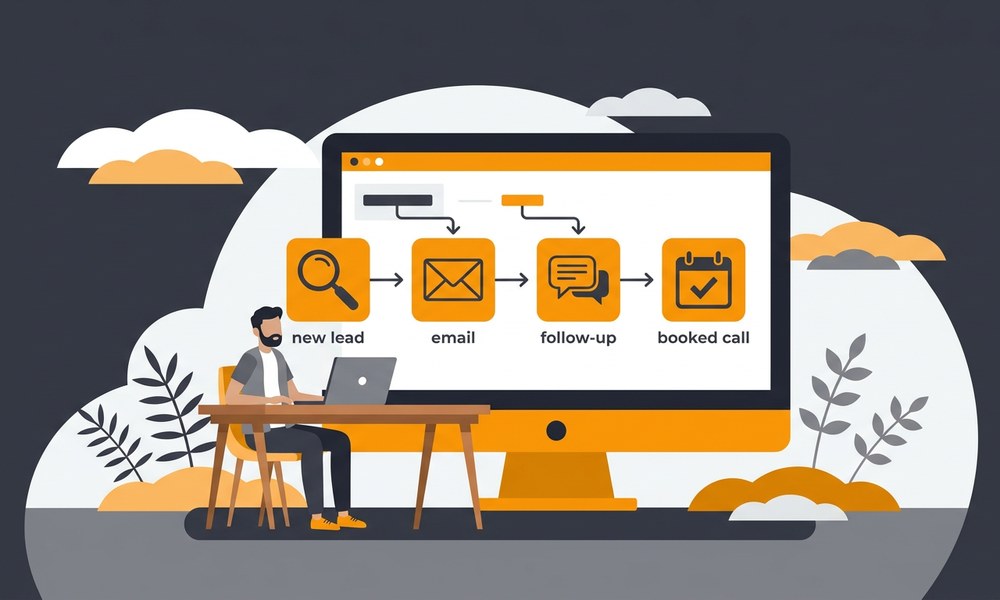
Here’s how we explain automation to our clients: automation handles the timing, you handle the humanity. The system sends the right message at the right moment, and when a lead raises their hand (opens three emails, clicks your pricing page, replies to a message), it alerts you to step in personally.
What Good Automation Looks Like
- Triggers: Actions like form submissions, page visits, or email clicks start a sequence automatically.
- Branches: Leads who engage get a different path from those who don’t.
- Lead scoring: Points are assigned for actions so you know who’s warmest.
- Alerts: You get notified the second a hot lead shows buying signals.
This is the thinking behind our proprietary Conversion Engine, a lead-nurturing and automation system that follows up with prospects through intelligent automation and personalized engagement, so no lead slips through the cracks while you focus on running your business.
A Quick Note on Canadian Email Rules
If you’re emailing Canadian prospects, you need to know about CASL, Canada’s Anti-Spam Legislation. In short, you generally need consent to send commercial electronic messages, every message must clearly identify you, and every message needs a working unsubscribe link. The Government of Canada’s Fight Spam resource explains the rules in detail. Build consent into your forms from day one and you’ll stay on the right side of the law while earning more trust.
Lead Nurturing Mistakes to Avoid
We’ve audited a lot of follow-up systems over the years. These are the mistakes that show up again and again.
Selling Too Soon
If every email is a pitch, people tune out. Follow the 80/20 rule: roughly 80% value, 20% offer. Be the helpful expert first.
Going Silent After the First Contact
One email isn’t a sequence. Many deals happen after the fifth or sixth touch, and most businesses stop long before that. Persistence, done politely, pays.
Ignoring Your Existing Customers
Nurturing doesn’t end at the sale. Past customers refer friends, leave reviews, and buy again. A quarterly check-in, a useful tip, or a “how’s it going?” email keeps relationships warm.
Never Looking at the Data
If you aren’t tracking which emails get opened, which links get clicked, and which leads become customers, you’re guessing. Review your numbers monthly and improve one thing at a time.
Treating Everyone the Same
A lead who just downloaded a checklist and a lead who requested a quote need different follow-up. Match your message to their moment.
How to Measure Lead Nurturing Success
You don’t need a stack of dashboards. Focus on a handful of numbers that tell you whether your nurturing is working:
- Lead-to-customer conversion rate: What percentage of leads eventually buy?
- Time to conversion: How long does it take a lead to become a customer? Nurturing should shorten this.
- Email engagement: Open rates, click rates, and reply rates show what resonates.
- Response time: How fast do you reply to new inquiries?
- Revenue per lead: The ultimate test, since it shows what each lead is actually worth.
Pick a baseline today, then check in every month. Small improvements stack up fast; a few percentage points on your lead-to-customer rate can mean real revenue without spending a dollar more on advertising.
A Simple 30-Day Lead Nurturing Action Plan
Ready to get started? Here’s a realistic plan for a busy owner.
Week 1: Get Organized
- List every place leads come from (website forms, phone calls, referrals, ads).
- Move all leads into one system, even if it’s a simple CRM.
- Set up an instant auto-reply for new inquiries.
Week 2: Write Your Core Emails
- Draft your five-email welcome sequence.
- Gather two or three strong testimonials or case studies.
- Add a clear call to action to every email.
Week 3: Turn It On
- Automate the sequence so new leads enter it automatically.
- Add basic segmentation by service or industry.
- Confirm your forms capture consent and every email includes an unsubscribe link.
Week 4: Measure and Improve
- Check opens, clicks, and replies.
- Rewrite the weakest email.
- Follow up personally with your warmest leads.
By day 30, you’ll have a working nurturing system, and a clearer picture of where your best customers come from.
Frequently Asked Questions About Lead Nurturing
How long does lead nurturing take to work?
You’ll often see better response rates within the first month, but the biggest gains usually show up over three to six months as your sequences, content, and data mature. Nurturing is a long game that pays off year after year.
Do I need expensive software?
No. You can start with a basic email platform and a simple CRM. The strategy matters far more than the tools. As you grow, more advanced automation can save time and sharpen results.
How many emails is too many?
There’s no magic number. If every email is useful, people are happy to hear from you. Start with one to two emails a week for new leads, then ease to a couple a month for longer-term prospects.
Is lead nurturing only for B2B businesses?
Not at all. Any business with a considered purchase benefits, including home services, healthcare, legal, financial services, and local retail. If customers take time to decide, nurturing helps.
Turn More of Your Leads Into Customers
Lead nurturing isn’t about pushing harder. It’s about showing up consistently, helpfully, and personally until the moment is right. The businesses that grow fastest aren’t necessarily the ones getting the most leads; they’re the ones converting the leads they already have.
If you’d like help building a nurturing system that fits your business, we’d love to talk. SOAP Media is a family-owned, Ottawa-based agency that combines human creativity with AI-powered tools to supercharge your lead generation, from first click to closed deal. Book a free strategy call and let’s turn your clicks into conversions.
Posted in Digital Marketing, Lead Generation and tagged
Get a Free Site Audit Today!
Fill out our form to find out how your company stands up to the market in organic ranking!
